

LENTEN MEDITATIONS:
1. THE PILGRIMAGE OF LENT: CONVERSION, PENANCE, AND RECONCILIATION
FAUSTO GOMEZ 0P
The word “lent”, we are told, derives from an old English word “Lenten,” which means springtime. On the other hand, the Latin word “Lente” means going slowly. Based on this double etymology, “Lent signals the onset of spring and invites us to slow down our pace, to gather our thoughts, as it were, to take stock of our lives, to begin once again, to put things in their proper perspective” (Richard McBrien).
In his simple and beautiful Lenten Message (February 5, 2026), Pope Leo XIV invites us to cultivate listening, to fasting by not using hurting words, and to unity among us: listening, fasting, together.
The journey of Lent goes through conversion and penance to reconciliation.
CONVERSION
Jesus started preaching thus: “The Kingdom of God is at hand, repent.” Repent, that is, be converted - say no to sin and yes to love. Conversion to God from sin is a continuing process. Integral conversion implies conversion to God, to all others, ad d to creation.
Conversion is continuing conversion which is a never-ending process of life. This conversion is primarily conversion of the heart, the seat of a person’s moral make-up, a conversion centred on “putting on Christ” in a deeper manner (cf. Rom 13: 14; Vatican II, Lumen Gentium 36). It implies, in a true sense, seen people with the eyes of Jesus. Continuing conversion is strengthened by prayer and meditation, the reception of the Sacraments, in particular the Sacraments of Reconciliation and the Eucharist.
Conversion is not easy for it requires change – change of heart and of life. Change in our comfortable life is difficult for it implies certain disturbance: conversion disturbs us and that is why is hard “for the last thing most people desire is to be disturbed” (W. Barclay). It is not easy but possible – always: with God’s grace and love that never fail, and our humble and modest cooperation. Real change is metanoia, which means literally change of mind, of mentality (Rom 12:2) and of heart. Conversion, then, implies change in being (metanoia) and in doing (epistrefein).
True conversion is a dynamic and ongoing process of change and renewal. To be converted means to renounce sin, and to return to God -and to fellow human beings (cf. Mk 1:15). Conversion signifies, above all, to turn back to God from sin, which is darkness and slavery and a betrayal of God’s love. Conversion means, as St. Augustine tells us powerfully, “to die to death and to live to life” (Confessions).
PENANCE
The journey of lent includes conversion, penance and penances; conversion through penance and penances.
Pope John XXIII wrote in his diary: “There are two paths to paradise: innocence and penance.” We have lost our innocence, so the path open to us is penance.
Penance is a virtue, that is, a success in self-realization, a good operative habit or strong disposition that inclines us to be penitent, to do acts of penance. For Christians, penance is a permanent attitude that leads us to fight selfishness and practice un-selfing. It is closely linked to the theological virtues: Faith is the soul of penance; hope, its dynamic force, and charity, its form (W. Kasper). Charity – the queen and mother of all virtues - gives life and value to penance, and to all other virtues. Penance is deeply connected with the virtue of justice, which disposes us to give to each person his/her due, that is, his/her rights.
Penance is ordered to the destruction of sin as an offense against God and neighbour. The ultimate goal of penance is “that we should love God and commit ourselves completely to him” (Paul VI). According to Vatican II, the real essence of the virtue of penance is hatred for sin as an offense against God, and against God’s children –all neighbours -, and against God’s creation. The prophet’s advice: “Atone for your sins by good deeds, and for your misdeeds by kindness to the poor; then your prosperity will be long” (Dan 4:24). Saint Peter Chrysologus: “Give to the poor and you give to yourself.” In his Lenten Message, Pope Leo tells us that we ought to listen to the cry of the oppressed.
What kind of penance the Lord wants us to do? The Lord keeps answering us through his prophet Isaiah, and above all, through Jesus. God wants a fasting that breaks the fetters of injustice, that shares food with the hungry, that brings to your house the unsheltered needy, that clothes the man you see naked, and does not turn away from your own kin (Is 58:6-7; cf. Lk 16:19-31). Jesus: “I was hungry…” (Mt 25: 34-36). We remember the parable of the rich man and poor Lazarus, and the parable of the last judgment.
Penance is mainly interior penance, which is centered on repentance, as a firm disposition of the soul to renounce sin and return to God, as a permanent inclination to change our lives following the direction of Christ. Its central act is contrition as a deep sorrow for sins committed.
Interior penance inclines us to do external penances. In the Dominicans’ Book of Constitutions we read: The principal forms of penance are: the performance of spiritual exercises, works of mortification or self-denial, works of benefit to the community. In a radical sense, penance and penances ought to lead us to do better what we ought to do as human beings, as Christians, that is a greater fidelity to vocation and mission: to do what we ought to do with love.
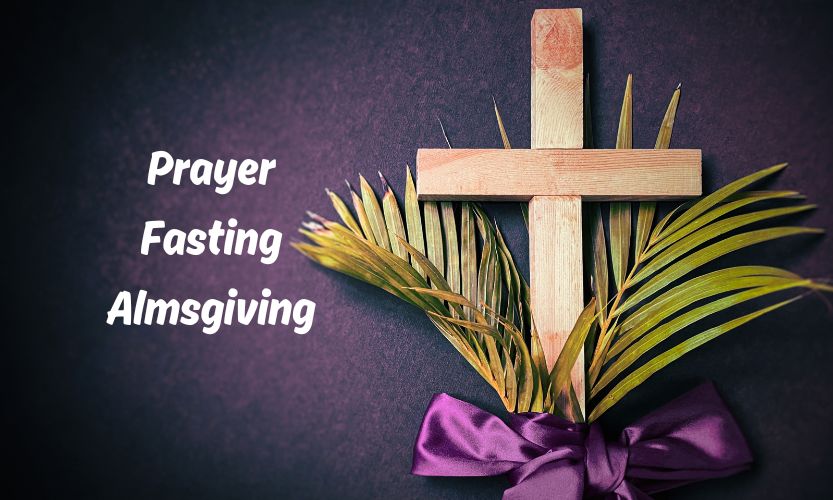
The classical penances are prayer, fasting and almsgiving. These penances help us re-establish and fortify our relationships with God through prayer, with ourselves through fasting and abstinence, with others through almsgiving and forgiving, and with creation through ecological responsibility.
RECONCILIATION
The virtue of penance leads to the Sacrament of Penance or Reconciliation. The virtue of penance entails “The will to receive the Sacrament of the forgiveness of sins,” including, our sins against God, neighbours, the poor neighbour and creation (K. Rahner).
Through God’s gift of Lent, let us continue trying to be more deeply converted, to pray better, and fast to be temperate, and share a little more with the marginalized and excluded in our world – a world that needs our prayer and compassion. Lents calls us to a simple lifestyle.
Lent is a time to change: metanoia, renewal. An inspiring fable from Arabian narratives. The teacher Bayacid told his disciples: When I was young, I wanted to be a revolutionary. Every night I prayed to God: “Give me courage to change the world.” Nothing happened. When I became an adult, I wanted to change my family and those around me, and I prayed every night: “Lord, help me change those around me, at least my family.” Nothing happened. Now that I am old, I realize how silly I was, and my prayer is: “Lord, give me your grace to change myself.” He added: “If I had prayed like this, I would not have wasted my life.” And, then, the family began to change.
Lent reminds us that we are dust and in dust we shall return. Yes, but more importantly, Lent leads us to Easter through the passion, death and resurrection of Christ. Through Lent, we do not forget that we are Easter people and alleluia is our song! (FGB)