

LENTEN MEDITATIONS:
IV. FIGHTING TEMPTATIONS
Temptations are invitations to do evil, to commit sin: a hateful thought, an insulting word, not helping a neighbor in real need. Temptations are part of our life and will accompany us always – to all. Thomas a Kempis writes: “The life of man upon earth is a temptation.” We all are tempted by three tempters. Outside us: the devil and the world (with its false values). Inside us: the flesh (the passions). Tempter number one: the devil.
Abraham, Moses, Jacob, David, the prophets… all were tempted – like us. Jesus was also tempted. Three times in the desert (on bread, on power, on riches - cf. Lk 4:1-13). Satan also tempted him through Peter who asked him to abandon the road to calvary (cf. Mk 8:31-33). When He was on the cross, passersby asked him to come down from the cross (cf. Mk 15:29-32).
Temptations are solicitations to do evil, but also opportunities to do good. Temptations help us to become strong morally and spiritually. Moreover, they warn us to be careful for we know that we are weak and could fall. Temptations aid us to be humble before God and to ask for his help.
Temptations, if consented, are contrary to true freedom and love – to happiness. Trials abound in our life. In a sense, we need them: they are like the wood of our personal cross, instruments towards purity of heart and steps to heaven, elements of our continuing conversion. St. Augustine tells us: “We progress by means of trial, and no one knows himself except through temptation, or receives a crown except after victory, or strives for goodness except against an enemy or temptations.”
We fight temptations by not conversing with them; by fleeing from them as fast as possible, by taking refuge in prayer.
Abbas Serenus, father of the desert, tells us: “We ought to hold unwaveringly to two things: the first is that not one… is ever tried without the permission of God. The second is that everything which is brought upon us by God, whether it appears sad or joyful at the time, is ordained as by a most tender Father and a most merciful physician for our benefit” (John Cassian, Conferences, Seventh, XXVIII).
Jesus, the Son of God, walks with us. No man can defend himself from the temptations which assail him…Only in the company of Jesus can we walk in the world and keep our garments unspotted from it. Without him we are defenseless; with him we are safe (W. Barclay). In the company of Jesus, with God the Father’s love and the grace of the Holy Spirit, we fight our temptations. Also very helpful: the holy sacraments, penance and penances. We practice vigilance, and prayer: “Watch and pray so that you may not fall into temptation” (Mt 26:41).
We are sure of one thing: God will never allow the devil to tempt you and me beyond our strength. Besides, God is faithful… and “will also provide the way out so that you may be able to endure it” (1 Cor 10:13). With Jesus’ available help, we reject sin and evil, which are bad company, and lies or “fake news.” Temptations, like the apple of Eve and Adam “look nice to be eaten,” but they produce inevitably - after inordinate pleasure - sadness, remorse, darkness. Furthermore, temptations consented increase our weakness, and “lead to sin and death” (CCC 2847). Confidently, we firmly believe that “The help of the Holy Spirit is greater …than the attack of the envious devil” (STh, III, 41, 2 ad 2).
Prayer is one of the best weapons to win over temptation: “The old serpent will tempt you and give you trouble, but he will be put to flight by prayer; furthermore, the main entrance will be closed to him by useful exercises” (Thomas a Kempis, Imitation of Christ,). Karl Rahner encourages us thus: Keep close to God, beware of the enchanted circle of evil “that poisons.” And adds: the deepest meaning of temptation is this: “an invitation to pray; whoever prays during temptation will conquer it.”
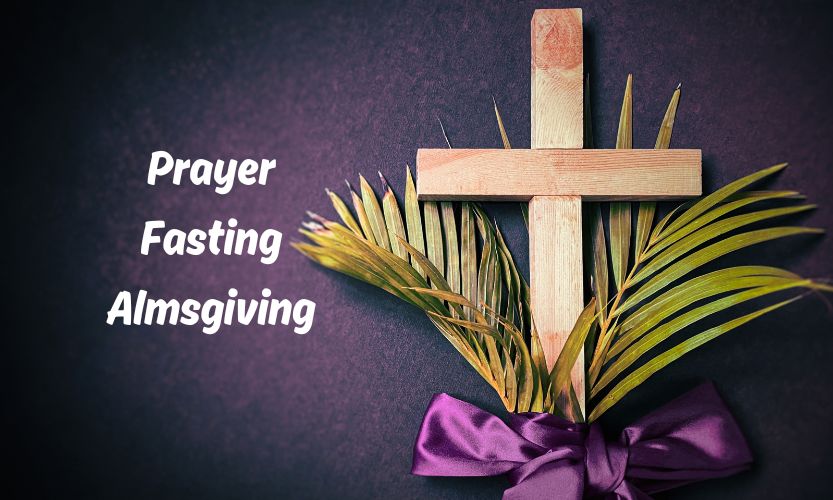
Humble prayer leads us to fasting, and fasting to almsgiving and forgiving – to mercy. The three traditional penances together are useful weapons to overcome our temptations.
The sixth petition of the Our Father: And lead us not into temptation is literally incorrect God does not lead us into temptation: God “tempts no one” (Jas 1:13). Pope Francis approved a change in the English version of the Our Father: instead of “lead us not into temptation,” the Argentine Pope approved, “Do not let us fall into temptation.” He explained: “A father does not do this; a father helps you to get up immediately. It is Satan who leads us into temptation – this is his department.” The Pope’s change is, in fact, a translation from the Spanish Padre Nuestro: “No nos dejes caer en la tentación,” that is, “Do not let us fall into temptation.”
An additional important point: we are asked constantly to resist temptations and remove the occasions of sin: “Whoever loves danger will perish in it” (Sir 3:26). “It is something lost if we do not remove wholly all occasions of sin” (St. Teresa of Avila).
If we use the proper weapons against temptations, we shall win, because divine help is always available: “Do not be dismayed, because He [God] will never abandon you when tempted” (St. Juan de Avila).
Temptations conquered help us grow in moral and spiritual strength, in humility, in love, in holiness - in happiness. If we overcome them, consolation from God comes: “To everyone who overcomes, I will give permission to eat of the tree of life that is in the paradise of God” (Rev 2:7).
“The Lord saves in time of disgrace”” (Sir 2,11. )If, unfortunately, we fall into temptation, we make recourse to our omnipotently merciful Father, and we ask for forgiveness and approach the Sacrament of Penance appropriately. Hopefully these consented temptations have taught us to be more careful when facing future temptations – that will come!
AND TO CLOSE, a final advice from Thomas a Kempis: “Take courage! Let us go forward together, Jesus will be with us. For the sake of Jesus, we have taken up this cross; for the sake of Jesus, let us persevere in it. He will be our helper, who is our captain and our forerunner.” (FGB).