Our Lady of the Rosary Province of the Order of Preachers
  • Home
    • History
    • Provincial Curia
      • Novitiate
      • Studentate
    • Vicariates & Missions
      • Mission in Taiwan
      • Mission in South Korea
      • Mission in Singapore
      • Mission in Timor Leste
      • Mission in Myanmar
      • Vicariate of Philippines
      • Vicariate of Japan
      • Vicariate of Venezuela
      • Vicariate of Spain
  • Officials of the Province
  • Dominican Saints
    • Saint Dominic de Guzman
  • Vocation
    • Religious Life
    • Formation

Select your language

  • Español
  • English (United Kingdom)
PALM SUNDAY

PALM SUNDAY

For many people, the culmination of life is to recognize what they have done. If they have been a good father-mother, brother ... ..and to be recognized in life. There are many people who have been recognized and are still recognized. History keeps reminding you. There are people who are remembered for the good they did and others for the evil they did.

"Hosanna, blessed is he who comes in the name of the Lord. Blessed is the kingdom that comes, that of our father David. !Hosanna in the high! "(Jn.12,13)

In our case this Palm Sunday we remember how people recognized Jesus as someone who had done a lot of good. They recognized him in life. He had always been close to the people, the little ones, the last ones, the ones abandoned by society. That was the plain and simple people with whom Jesus always lived and who always carried in his heart. The simple people with a clean look, without personal interests, recognized Jesus as the Messiah sent by God, the God made flesh walking with his people like the good shepherd, the man who cried and laughed with people when there was to laugh or when there was to cry The man who rested, who sought his time to be alone with the Father and the man who ran when someone needed him. The man faithful to his people, faithful to the truth, faithful to his mission. The man who never is tired of walking, of bringing the good news to all the homes and corners of the villages. A man focused on humanizing people with His closeness, word, with His entire person. Jesus, the simple man who always thought about others. The man who not only care for those of His people, but He had an open heart to all, Jews and pagans, men and women, rich and poor, good and sinners, great and small. The majority of the simple people who did not have particular interests but a simple and clear look recognized him as the one who was always on his side and that is why they cheered Him on his entrance to Jerusalem. Jesus had fulfilled many of their hopes, had cured their illnesses, He forgot their sins, restored their dignity by touching them, entering their homes and eating with them. How they would not acclaim him as king, as the Messiah awaited for so long!

"You see how you have not achieved anything ? The whole world has gone after Him" (Jn.12,19)

But there were others behind wanting and preparing His death. They were the powerful ones, those who had their own interests and could not allow a poor Jews from Bethlehem, son of Mary and Joseph, to change things. For them, things were good because they were doing well. Furthermore, it was not exactly what they expected of the Messiah, of the Son of God. Jesus had not changed anything, he had not driven out the Jews of Israel, which was what they expected to gain total control. He had faced some of his most sacred traditions such as Saturday, entering the home of public sinners and eating with them, forgiving sins. A scandal for them so closed in their traditions and that they thought they were so good.

This could not end well. On the one hand the simple people in favor of Jesus and on the other the authorities against. Jesus had uncovered the reality of the people, the incongruity of the powerful and the true hunger of the little ones. But unfortunately as almost always who triumphs is not the simple people, but the great ones. They know how to confuse the little ones, how to use them, how to put on their lips, "crucify" them.

Jesus had not looked for anything, neither power nor recognition nor anything. He was not looking for power or death. He was not against anyone, He was only for man. That was all His concern. He had no personal interest and that's why He was so free to talk and do things. He was only interested in man, his dignity as a person and as a child of God. This was all His eagerness. Neither be king, nor be acclaimed, nor be recognized, nor be served, nor be admired, nor be praised! He was the face of what is expected of man and what it really means to be a man. He did it by His own personal conviction and by being authentic to his way of thinking. In turn, it was also the reflection of the Father. A divine Father but who was very human, as much as divine. In Jesus this could not be separated, as human as divine and as divine as human. That is why it was also the face of the divine as a reflection of the Father, and also as a reflection of the man of truth in which His divine part cannot be separated from His human part either.

Today we also acclaim Jesus with our lips, we carry out our branches to receive Him with joy as simple people. We have also seen Jesus acting in our lives, He has not touched the heart, He has given us back our sight, He has made us walk again, He has forgiven us, we have heard His word of encouragement of life, He has given us His spirit to open our heart of stone, He has invited us to eat His body. How many personal experiences of His love, of His mercy, of His grace.

Something that is at the bottom of our heart and that we cannot erase. Our most precious treasure. But we are also there, willing to sell ourselves for our personal interests, to fall whoever falls to save ourselves and ours. We are like the powerful and we do not want anyone to touch us one bit of what we have or are. There are people who move things so that everything continues the same and nothing moves. They know how to make our desires of goodness, of fidelity to Jesus and his message, diffuse and end our good and authentic wishes.

Let us enter Jerusalem with Jesus, with our brothers and sisters with joy and acclaiming: "Blessed the one who comes in the name of the Lord, Hosanna in Heaven!” Let us disregard our own interests and recognize from the heart that the Lord is great and has done wonders, his name is holy and his mercy extends from generation to generation.
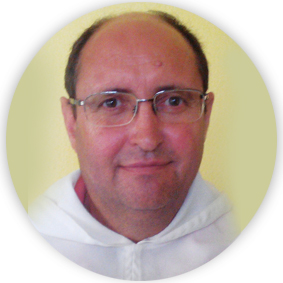
Fr.Ruben Martinez OP

Fr. Rubén Martínez op

Holy Rosary Province Spirituality 24 March 2018
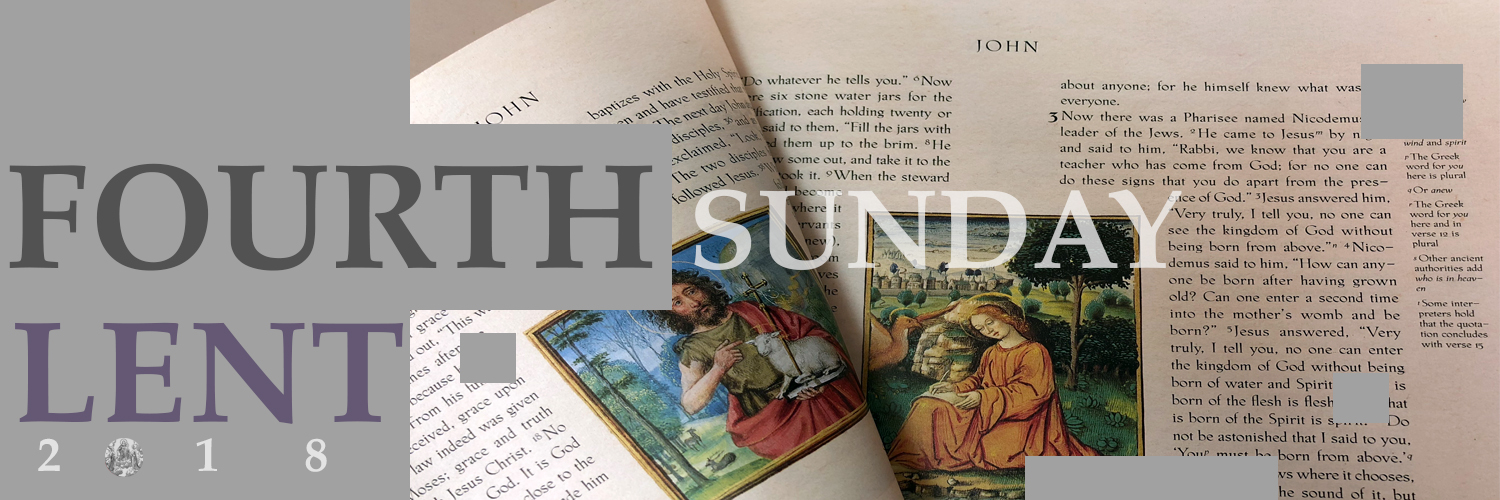
FOURTH SUNDAY OF LENT

FOURTH SUNDAY OF LENT

The Gospel offers us a beautiful compendium of the whole history of salvation this fourth Sunday of Lent. Its guide us ourselves to prepare our hearts to earnestly seek him; also it helps us to redoubled our attention to the Word of God, our own plan of live, and to see ourselves in the entire human family.

The second book of the Chronicles echoes the history of infidelities lived by the people of Israel. It show us the commitment of Yahweh through the preaching of His prophets.  And how He redirects them again through the paths of the covenant agreed with their parents. The author of the book knows very well what is the key to God's action: "the compassion he felt for his people".

This compassion of God for his people and for all humanity is the hopeful thread of the three readings that the Eucharistic liturgy of this Sunday gathers. Saint Paul expresses it openly to the Christian community of Ephesus: we are saved, forgiven, called to an endless life, not by our merits or efforts, but in Christ and by Christ. And he adds a commitment that seems particularly interesting to us today: "so that we may dedicate ourselves to the good works that He himself has shown us".

Jesus' dialogue with Nicodemus leads us to the summit of this unfathomable mystery of love which is the redemptive work toward which we are heading on this Easter journey: "God so loved the world, that he gave his only begotten Son, so that he will not perish none of those who believe in Him, but have eternal life. "

I think that this abundant expression of God's love for humanity that is offered today calls us, at least, to these two great realities: contemplation and action.

When we began this year the Lenten journey with the celebration of the imposition of the ashes, Pope Francis invited us to stop. This stop is necessary. We have too many hurries, too many claims and anxieties, too much noise and commotion, enveloping and suffocating us. We are overly concerned with the immediate and material realities. It atrophied our transcendental connections. The spiritual dimension of the human being languishes or completely disappears from many of our contemporaries.

We must take time to listen the beating of the mystery, to listen and delight in the Gospel what it offered to us. We must take a time for ourselves to realize that we are involved and inhabited by a Mystery of Love that explains us which is the origin and goal of our pilgrimage through this world.

The attentive and continued contemplation of the Love of the Father, which has been manifested to us in the history of his Son among us, will lead us to live a true commitment of love. Love that is not selfish and does not judge. The same Love that  believes, waits and serves without limits. It is the beginning to starts every day.

This love shows the joy of those who have experienced love in their lives. With this love the world is clothed with humility, filled with peace and hope. (cf Jer 29:11).

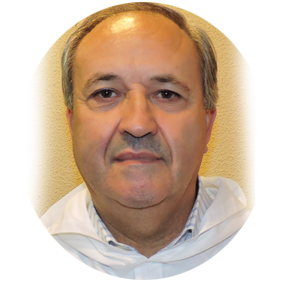
FR. CESAR VALEROOPFr. César Valero Bajo, OP

Holy Rosary Province Spirituality 10 March 2018
1th Sunday of Lent: The Desert Of Needs. The Desert Of Attitudes

1th Sunday of Lent: The Desert Of Needs. The Desert Of Attitudes

Lent suggests us more closeness with the Word of God. The first Sunday focuses on the central message of the Christian life: the announcement of the kingdom. Our world needs the good news of the nearness and accompaniment of Jesus.

LENT OF THE WORLD.

A diagnosis is made in the pages of the creation of the world. God separates the water from the earth to make it habitable, an stable house of men. Next to this the separation of those elements appears the invasion of man, turning chaos to the earth, a place of nonsense, to the point that God decides to level it again with water, purifying it.

We have a populated world but at the same time it is a desert of values. In this world "wild beasts and birds of prey" live of all kinds that threaten human life, so the creation of God is destabilized. We have learned to live in comfortable terms and consider the functional as the most important. People ignore the ends and care about means (aesthetics, appearance, little effort, comfort); We have access to everything to cover any need (pills to sleep and wake up, get fat and lose weight, lower and raise the tension); We want everything to be given to us and to live without knowing about suffering, problems and needs. These are the characteristics of a man who dispenses with God and who despises him.

LENT OF JESUS.

Jesus urges the need of the world. That is why he is going to meet the world. He has an irrepressible feeling to take his love and accompany him steadily. His Lent is this entrusted mission, his incarnated life from which he will make a journey towards the promised land with men.

Jesus does not go to the desert of silence, solitude, geographical place separated from society like John, but he goes where man is to announce the closeness of the kingdom. Jesus cannot ignore blessing and sacralising the world. The world cannot expect anything else for their salvation: they come together in the same desire of God. Since Jesus is incarnated, the deadlines are over, he begins his journey with us and everything is sacralised. Every man and woman are sacred, more than the temple; we are encounters with God, holiness of God in every moment of history. Jesus announces: that man is no longer alone in the worst moments of pain and suffering, problems and burdens and disappointments; He tells us that the human being has a companion for the road only if they open their eyes and heart to welcome him.

OUR LENT.

The letter of Peter tells us that the flood is a sign of our baptism and actualization of the covenant that enables us to recognize the low value of the promises of the world, and to respond from trust in God. We must understand that Believing and trusting is knowing where we can place our sin, and knowing who forgives us. To believe and trust is not to not sin, or to live ritual perfection.

The conversion is to turn our life towards God, to direct it towards his grace and to feel his closeness. Our commitment cannot be the fact of making more sacrifices, being more fulfilled, praying more. We must listen to the good news of the gospel as if it were the first time to cross the desert of our lives, with human sense and sensitivity for others. This is what we repeat every day in the Our Father when we say: hallowed be thy Name..., sacralise and sanctify God in the service to the brothers.

FR. PEDRO JUAN ALONSO MERINO

By Fr. Pedro Juan Alonso OP

Holy Rosary Province Spirituality 17 February 2018
  1. WAY OF THE CROSS 2018
  2. Ash Wednesday: "Return to me, says the Lord, with your whole heart"

Page 14 of 14

  • 5
  • 6
  • 7
  • 8
  • 9
  • 10
  • 11
  • 12
  • 13
  • 14
© 2026 Holy Rosary Province. All Rights Reserved.
Our Lady of the Rosary Province of the Order of Preachers
  • Home
    • History
    • Provincial Curia
      • Novitiate
      • Studentate
    • Vicariates & Missions
      • Mission in Taiwan
      • Mission in South Korea
      • Mission in Singapore
      • Mission in Timor Leste
      • Mission in Myanmar
      • Vicariate of Philippines
      • Vicariate of Japan
      • Vicariate of Venezuela
      • Vicariate of Spain
  • Officials of the Province
  • Dominican Saints
    • Saint Dominic de Guzman
  • Vocation
    • Religious Life
    • Formation